Discover the Magnificent World of Fruits That Start With M
The natural world offers an incredible bounty, and among its most delightful treasures are fruits that start with the letter 'M'. From the sun-kissed tropics to temperate groves, these fruits present a vibrant spectrum of colors, flavors, and textures. More than just a treat for the taste buds, they are packed with essential vitamins, minerals, and antioxidants, offering a natural boost to our daily energy and overall well-being. Exploring these diverse fruits not only broadens our culinary horizons but also enriches our understanding of global botany and healthy eating. If you're fascinated by the world of unique produce, you might also enjoy exploring more about
fruits that start with m - Article 1 and
fruits that start with m - Article 2.
Why Explore Fruits That Start With M?
Beyond their delightful flavors, fruits beginning with 'M' are powerhouses of nutrition. Many are known for their high Vitamin C content, crucial for immune health, while others offer significant amounts of Vitamin A for vision, or dietary fiber for digestive well-being. Incorporating a variety of these fruits into your diet can contribute to a balanced and healthful lifestyle. Furthermore, learning about these specific varieties can significantly enhance your vocabulary and knowledge of global agriculture, making you a more informed consumer and a more adventurous eater.
Tropical Treasures: A Deep Dive into 'M' Fruits
The tropics are a hotbed of biodiversity, and many of the most celebrated fruits that start with 'M' hail from these warm climates. Their unique characteristics and robust flavors make them sought-after ingredients worldwide.
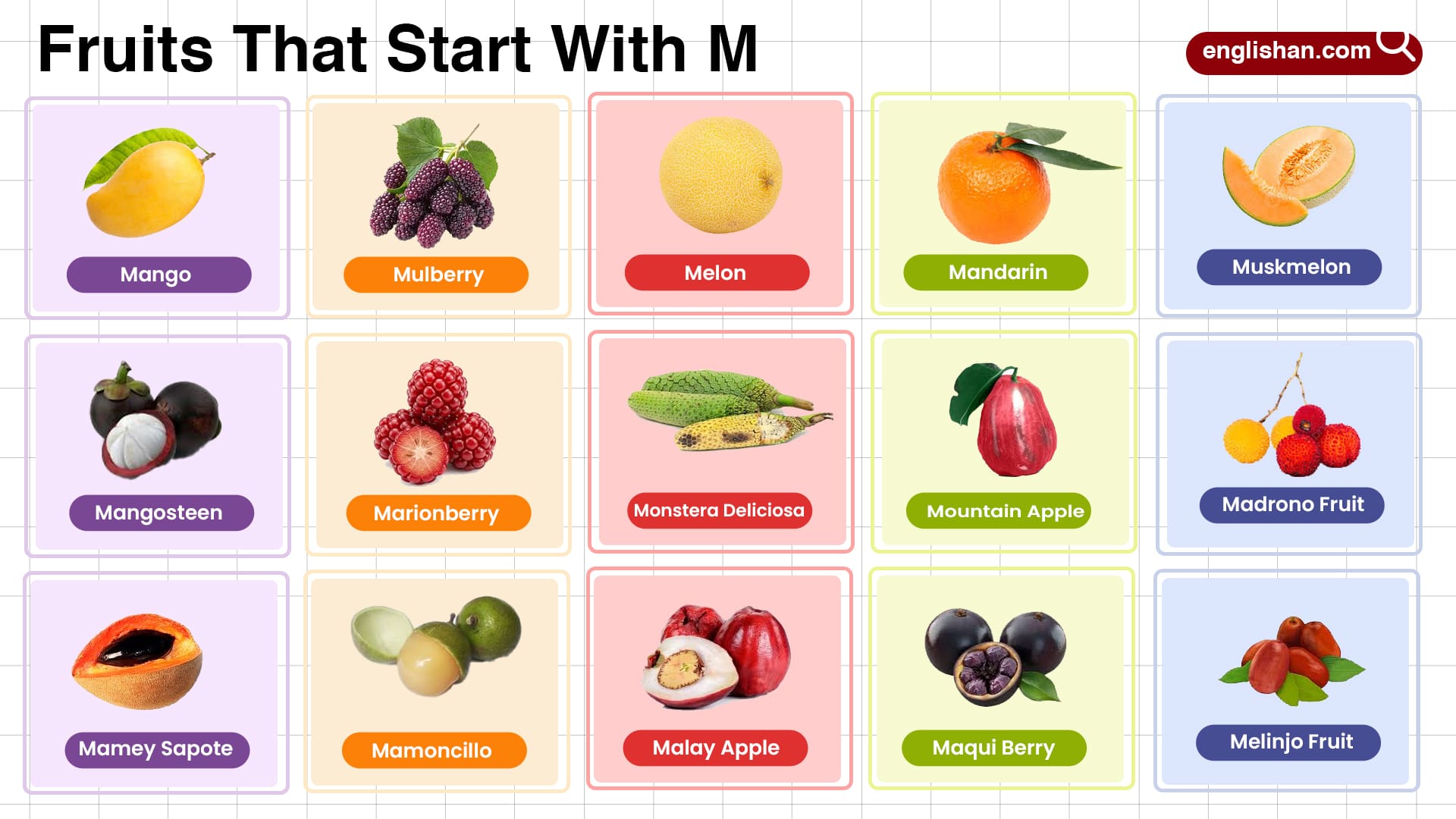
- Mango: Often hailed as the "king of fruits," the mango is an indisputable tropical star. Its sweet, juicy, and fibrous flesh, ranging from golden-yellow to deep orange, is a staple in many cuisines. Rich in Vitamins A and C, mangoes are incredibly versatile, enjoyed fresh, in smoothies, desserts, salsas, and even savory curries. Their distinct aroma and unparalleled sweetness make them a global favorite.
- Mangosteen: Revered as the "queen of fruits," the mangosteen is a true delicacy. This round, deep purple fruit encases delicate white, tangy-sweet segments that melt in your mouth. Its flavor is a complex blend of lychee, peach, and strawberry, with a hint of citrus. Beyond its exquisite taste, mangosteen is known for its potent antioxidant properties.
- Marang: Hailing from Southeast Asia, the marang is an aromatic marvel. Its soft, white, creamy pulp offers a unique flavor profile often described as a mix of jackfruit, durian (without the strong odor), and banana. Best enjoyed fresh, its distinctive sweetness and fragrance make it a memorable tropical experience.
- Mamey Sapote: This large, oval fruit boasts rough, brown skin and strikingly vibrant orange-red flesh. The mamey sapote is celebrated for its incredibly sweet and creamy flavor, often compared to a blend of pumpkin, apricot, and almond. It's a favorite in Latin American desserts, milkshakes, and directly from the spoon.
- Malay Apple: With its shiny, crimson skin and crisp, white flesh, the Malay apple is both beautiful and refreshing. It offers a mild, slightly sweet taste, often likened to a subtle pear or rose water flavor, making it a perfect light snack or addition to fruit salads.
- Mamoncillo: Also known as Spanish lime or genip, mamoncillo is a small, green tropical fruit. Its tart, juicy pulp surrounds a large seed and is typically eaten by breaking the skin and sucking the pulp directly. Its tangy flavor is incredibly refreshing, especially on a hot day.
- Marula: Native to Southern Africa, the marula is a small yellow fruit with a tart, citrusy flavor. It's particularly high in Vitamin C and is enjoyed fresh or fermented into alcoholic beverages like Amarula cream liqueur.
- Mangaba: This small, yellow-skinned fruit from South America offers a delightful sweet and tangy flavor. Mangaba is often consumed fresh or used to make juices and ice creams, prized for its refreshing taste.
- Mabolo: Also known as velvet apple or kamagong, the mabolo is a unique fruit with soft, reddish-brown, fuzzy skin. Its strong, pungent aroma (sometimes compared to cheese) belies a sweet, creamy pulp with a delicate flavor reminiscent of apple or banana.
- Mountain Soursop: A rarer cousin to the common soursop, the mountain soursop provides a distinctive tangy-sweet pulp, often used in juices and desserts. Its unique flavor profile offers a refreshing twist on tropical tastes.
Rare, Exotic, and Unique 'M' Discoveries
Beyond the commonly known, there's a fascinating array of less-common but equally captivating fruits that start with 'M'. These varieties often possess extraordinary qualities, from unique flavor transformations to impressive nutritional profiles.
- Miracle Fruit: Perhaps one of the most intriguing 'M' fruits is the miracle fruit. This small red berry contains a glycoprotein called miraculin, which temporarily alters taste receptors, making sour foods taste incredibly sweet. Imagine lemons tasting like lemonade! It's an experience unlike any other and has potential applications for those managing dietary restrictions.
- Monstera Fruit: From the ornamental Monstera deliciosa plant comes a truly exotic fruit. The monstera fruit has a distinctive segmented, scaly exterior that peels away as it ripens. Its sweet, aromatic flesh tastes like a delightful blend of pineapple, banana, and mango, but must be consumed only when fully ripe to avoid irritation.
- Maqui Berry: Hailing from the Patagonia region, the maqui berry is a small, dark purple superfruit. Packed with antioxidants, particularly anthocyanins, it has a sweet, slightly tart flavor. Maqui berries are increasingly popular in health supplements, juices, and smoothies due to their impressive wellness benefits.
- Mammee Apple: Distinct from the mamey sapote, the mammee apple is a large, round fruit with rough brown skin and rich, orange-yellow flesh. Its flavor is sweet and slightly musky, often described as a blend of apricot, peach, and melon, making it excellent for preserves and desserts.
- Mexican Pitahaya (Dragon Fruit): While widely known as dragon fruit, this vibrant fruit also goes by its regional name, Mexican Pitahaya. With its striking bright pink or yellow skin and white or red flesh speckled with tiny black seeds, it's as beautiful as it is mildly sweet. Its subtle flavor and crunchy texture make it a popular addition to fruit salads and smoothie bowls.
- Maypop: This native North American passion fruit variety is known as maypop. It has a tough outer rind that encases a juicy, seedy interior with a delightful balance of tartness and sweetness, perfect for jams, jellies, and fresh eating.
- Mimusops Elengi: Also known as bullet wood fruit, Mimusops Elengi is a small, oval, yellow-orange fruit. It offers a sweet, aromatic flavor and is not only enjoyed fresh but also valued in traditional medicine for its various properties.
- Murray's Plum: A less common plum variety, Murray's Plum is a small, dark red to purple fruit. It offers a distinct tart flavor and is often used in preserves or enjoyed by those who appreciate a more sour fruit experience.
Zesty and Refreshing: Citrus 'M' Fruits
The world of citrus fruits also contributes significantly to our list of 'M' starters, bringing their signature tang and refreshing qualities to the forefront.
- Mandarin: Beloved for its easy-to-peel skin and exceptionally sweet, juicy segments, the mandarin is a popular choice for snacking and culinary applications. Rich in Vitamin C, mandarins are a delightful addition to salads, desserts, and savory dishes.
- Mexican Lime: Small yet mighty, the Mexican lime (often called Key lime) is renowned for its intense tartness and distinct aromatic juice. It's the star ingredient in classic Key lime pie and a staple in countless cocktails and marinades, offering a zesty punch.
- Makrut Lime: Distinguished by its bumpy, dark green skin and highly aromatic leaves, the makrut lime (also known as kaffir lime) is prized more for its fragrant zest and leaves than its juice. It's an essential flavor enhancer in Southeast Asian cuisine, imparting a bright, citrusy perfume to curries, soups, and stir-fries.
- Meyer Lemon: A hybrid believed to be a cross between a lemon and a mandarin orange, the Meyer lemon offers a sweeter, less acidic flavor than traditional lemons, with a delicate floral aroma. Its nuanced taste makes it a favorite among chefs for both sweet and savory preparations.
- Melogold: A hybrid citrus fruit, the Melogold is a cross between a pomelo and a grapefruit. It boasts the juicy, slightly firm flesh of a grapefruit but with a significantly sweeter, less bitter taste. Its refreshing quality makes it excellent for breakfast or a light snack.
- Midsweet Lime: As its name suggests, the Midsweet lime offers a milder, more balanced tartness compared to other lime varieties. Its less intense flavor makes it versatile for a wider range of culinary uses, from beverages to dressings, where a subtle citrus note is desired.
Conclusion
The fascinating journey through fruits that start with 'M' reveals a world brimming with flavor, nutrition, and unique characteristics. From the familiar sweetness of the mango to the mind-bending properties of the miracle fruit, and the zesty tang of various citrus varieties, these fruits offer an incredible palette for culinary exploration and dietary enrichment. Incorporating such a diverse range of produce into your diet not only provides essential nutrients but also opens up new gastronomic experiences. So, next time you're at the market, seek out an 'M' fruit and let your taste buds embark on a marvelous adventure!